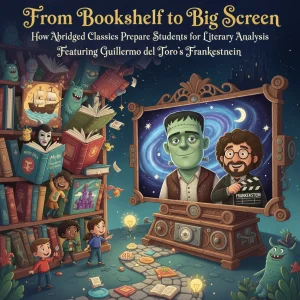
The literary world is buzzing with excitement! Guillermo del Toro’s highly anticipated Frankenstein adaptation is set to hit theaters, bringing Mary Shelley’s timeless gothic masterpiece to life with the acclaimed director’s signature visual flair. But here’s the thing: this isn’t just another movie release. It’s a golden opportunity for educators and parents to bridge the gap between accessible reading like abridged classics and sophisticated literary analysis—together, in a way that feels fun, doable, and genuinely inspiring.
Let’s be honest: diving straight into Mary Shelley’s original 1818 Frankenstein can feel overwhelming for many students. The layered narrative, philosophical questions about creation and responsibility, and long, winding sentences can intimidate even enthusiastic young readers. That’s where abridged classics come in as game-changers, creating a pathway that leads from simplified storytelling to deeper literary understanding—and ultimately to meaningful discussions about adaptations like del Toro’s upcoming film. If you’d like quick background before you begin, we recommend skimming Britannica’s overview of Mary Shelley and the Gothic novel to set the stage.
Let’s go on a trip down memory lane for a second. Many of us fell in love with classics because we first met them in classroom-friendly versions or saw them on screen. That first spark matters. Our mission at Classic Books for All is to make sure students get that spark through abridged classics that preserve the heart of a story while clearing the path for comprehension, confidence, and curiosity.
Why Abridged Classics Are Literary Analysis Launchpads
Think of abridged classics as the perfect training wheels for future literary scholars. When students encounter Frankenstein through a thoughtfully simplified version, they’re not getting a watered-down story; they’re getting the essential narrative, characters, and themes presented in accessible language that builds confidence rather than confusion. With that confidence comes a willingness to ask better questions and to notice more in both books and films.

Here’s what makes this approach so effective: abridged versions—our abridged classics—strip away linguistic barriers while preserving the story’s core elements. Students can focus on understanding Victor Frankenstein’s ambition, the Creature’s isolation, and the novel’s exploration of scientific responsibility without getting lost in 19th-century sentence structures. This foundation becomes incredibly valuable when they’re ready to tackle film adaptations and compare different interpretations of the same source material.
To make analysis feel even more grounded, it helps to keep one eye on a reputable edition of the original. For teachers who want to show side-by-side passages during lessons, the Penguin Classics edition of Shelley’s novel is a reliable anchor point: see Penguin Classics Frankenstein. Pairing a trusted original text with abridged classics invites an eye-opening exploration of language, tone, and theme without overwhelming students.
A quick, friendly recap for students:
- Victor Frankenstein: a brilliant, impulsive young scientist driven by the dream of creating life.
- The Creature: sensitive, curious, and increasingly desperate for belonging; often misunderstood.
- Elizabeth Lavenza and Henry Clerval: voices of compassion and friendship who reveal Victor’s blind spots.
- Big questions: What do creators owe their creations? Where does responsibility end? How do isolation and rejection shape identity?
We encourage you to read a few character bios with students from sources like Goodreads: Frankenstein to spark discussion and connect names with faces (or, in this case, with memorable traits).
Call to action: If you’re just getting started, try one chapter of our abridged classics version alongside a single paragraph from the Penguin edition. You’ll be amazed at how quickly students begin to notice meaningful differences in word choice and tone.
Building Critical Thinking Skills Through Accessible Storytelling
When students read an abridged version of Frankenstein from our abridged classics collection, they’re already practicing essential literary analysis skills without realizing it. They’re identifying protagonists and antagonists, spotting motifs (light and darkness, nature versus technology), recognizing themes of abandonment and revenge, and understanding the cause-and-effect relationships that drive the plot forward.
These comprehension skills transfer beautifully to more complex analytical tasks. A student who understands the basic dynamic between Victor and his Creature through an adapted version is much better prepared to discuss how del Toro might interpret that relationship visually, what casting choices reveal about character motivations, or how modern filmmaking techniques can emphasize different thematic elements. For practical classroom tools that support this kind of close reading, we love organizers from Scholastic’s Graphic Organizers—Venn diagrams, sequence charts, and character maps keep cognitive load manageable while deepening analysis.
Scaffolded skill-building with abridged classics:
- Distill the plot first: Who wants what, and what stands in their way?
- Track character arcs: How do Victor and the Creature change in response to rejection and guilt?
- Name the lens: Are we exploring ethics, empathy, or the impact of unchecked ambition?
- Move from “what” to “why”: Not just what happens, but why it matters—and how a filmmaker might portray it differently.
Friendly tip: Invite students to annotate with emojis or symbols in the margins of abridged classics—lightbulbs for big ideas, hearts for empathy moments, and storm clouds for conflict. This playful approach keeps analysis approachable.
From Page to Screen: The Perfect Comparison Opportunity
Del Toro’s Frankenstein presents an exceptional teaching moment because the director is known for thoughtful, visually rich adaptations that honor source material while bringing fresh perspectives. This creates multiple layers for students to explore and compare, especially for those who met the story through abridged classics.
Students who’ve read an abridged version within abridged classics can engage in sophisticated discussions about adaptation choices. Why might del Toro emphasize certain scenes over others? How do visual effects change our understanding of the Creature’s appearance and personality? What themes does the film highlight that might differ from their reading experience? To add context, a quick visit to Biography.com’s page on Guillermo del Toro helps students recognize his signature blend of empathy, myth, and meticulous design.
Film literacy makes the conversation richer. Consider this simple framework:
- Cinematography: camera angles and movement—does a low angle make the Creature look powerful or misunderstood?
- Production design: sets, costumes, and props—does the laboratory feel cold and metallic or warm and handmade?
- Sound design and score: how do music and silence shape suspense and emotion?
- Performance: small expressions, posture, and pacing—what do they communicate about inner life?
For approachable media-literacy resources, we like starting with PBS classroom materials. PBS LearningMedia’s collections are packed with bite-sized explainers educators can adapt; browse PBS LearningMedia and search “film analysis” or “media literacy” to find age-appropriate clips and prompts.
These questions encourage critical thinking that goes far beyond simple plot comprehension. Students learn to consider authorial intent, directorial vision, and the unique storytelling capabilities of different media—fundamental skills for advanced literary analysis.
Call to action: Try a five-minute “film still” warm-up. Pause a trailer frame, ask students to list every detail they notice, then connect those observations to themes from the abridged text. You be the judge—does the image suggest rage, grief, or longing?

Practical Classroom Applications
Let’s get practical about how to use this bookshelf-to-big-screen approach effectively. Start with our simplified Frankenstein adaptation that maintains the story’s essential elements while using contemporary language that engages young readers, as part of our abridged classics.
After students complete the abridged version, introduce film clips, trailers, and behind-the-scenes content from del Toro’s adaptation. Encourage discussions about what elements remain consistent between versions and what changes they notice. This comparison work develops the analytical skills they’ll need for more advanced literary study.
Create projects where students can explore different aspects of adaptation: character design choices, setting interpretations, or thematic emphasis. Some students might compare the Creature’s portrayal across different film versions, while others explore how the laboratory scenes reflect changing attitudes toward science and technology.
A sample 10-day mini-unit (adapt as needed):
- Day 1: Build background knowledge. Quick read-aloud of a key abridged classics chapter. Share Britannica’s short read on Gothic novels to define tone and common features.
- Day 2: Character focus. Use a Scholastic character map to track Victor and the Creature. Add three quotes (abridged text) that show change over time.
- Day 3: Theme spotlight. Small groups claim a theme—creation, responsibility, isolation—and collect supporting moments in the abridged text.
- Day 4: Visual warm-up. Watch a trailer or clip from del Toro’s adaptation. Note color palette, lighting, and sound. Quick-write: How do these choices shape mood?
- Day 5: Compare and contrast. Use a Venn diagram to line up the abridged classics scenes with the film’s interpretation.
- Day 6: Craft a claim. Students write a one-sentence thesis: “Del Toro emphasizes X theme by doing Y, which reframes Z moment from the book.” Peer feedback rounds.
- Day 7: Evidence hunt. Pull two book moments (abridged classics) and two film moments (from clips) that support the thesis.
- Day 8: Draft a short analysis paragraph (6–8 sentences) with a direct quote from the abridged text and a description of one film moment.
- Day 9: Gallery walk. Post paragraphs and still images (or storyboards). Students leave two “glow” and one “grow” comment at each station.
- Day 10: Reflection. Exit ticket: “What’s one insight you now have about storytelling that you didn’t have before?” Celebrate wins!
Extensions that work beautifully:
- One-pagers that combine a key quote, a symbol, and a mini film-still sketch.
- Socratic seminar with sentence stems to support shy speakers.
- “Trailer rewrite” where students storyboard an alternate opening that highlights a different theme.
Call to action: Want plug-and-play organizers aligned to this flow? Explore our abridged classics teacher guides—we designed them to make planning simpler and learning stick.

The Confidence Factor: Why This Approach Works
Here’s what we’ve observed time and again: students who start with abridged classics approach subsequent literary analysis with confidence rather than anxiety. They’ve already proven to themselves that they can understand complex stories, identify themes, and discuss character motivations. When it’s time to watch del Toro’s film, they’re not struggling to keep up with the basic plot; they’re ready to engage with adaptation choices and directorial interpretation.
This confidence creates a positive feedback loop. Students enjoy the discussion, participate more actively, and develop stronger analytical skills that serve them well in advanced literature courses. They begin to see themselves as capable literary thinkers rather than struggling readers. That’s the abridged classics effect—you be the judge.
A few supportive structures that make a big difference:
- Sentence frames for claims and evidence (Because…, This suggests…, In contrast…).
- Choice boards for products (podcast snippet, annotated still, mini-essay).
- Low-stakes practice first: 3–4 sentence “micro-analyses” before any longer writing.
To deepen author background knowledge without overwhelming students, consider a short classroom read of Britannica’s Mary Shelley overview. Understanding Shelley’s life—loss, creativity, and the intellectual circles around her—makes themes of creation and responsibility resonate more clearly and humanely.
From Theme to Thesis: Turning Insights into Analysis
Abridged classics give students the clarity needed to move from “I noticed a theme” to “I can argue a thesis.” Try this scaffold:
- Observation (book): In the abridged text, Victor avoids taking responsibility after creating life.
- Observation (film): In the trailer, del Toro frames Victor in shadow while the Creature stands in cooler light.
- Why it matters: The contrast suggests the film may critique Victor more harshly than the text.
- Thesis: Del Toro’s visual choices shift audience sympathy toward the Creature, transforming the ethical focus of the original narrative.
Add credibility by pointing students toward classic editions and summaries for cross-checking details. Penguin’s curated editions help students feel they’re referencing the “real thing” when they peek at originals: Penguin Classics Frankenstein. For a student-friendly pulse on public reception and favorite quotes, browse Goodreads: Frankenstein as a springboard for “reader lens” conversations.
Spotlight on Guillermo del Toro’s Vision
Del Toro has a gift for telling monster stories that are really human stories. A quick look at Biography.com’s profile of Guillermo del Toro reveals how his background and interests—fairy tales, folklore, and meticulous creature design—could shape this adaptation. Invite students to predict:
- Will the film emphasize the Creature’s loneliness and search for belonging?
- How might production design reimagine the laboratory to comment on ethics and technology?
- Which relationships (Victor–Creature, Victor–Elizabeth, Victor–Clerval) will the film foreground, and why?
Encourage learners to keep a “prediction tracker” and then confirm or revise after viewing clips. This turns watching into an intentional act of analysis.
For media-literacy mini-lessons, explore PBS LearningMedia and search for short videos on camera angles, sound, or production design. These bite-sized primers give students the vocabulary to express what they’re noticing.

Beyond Frankenstein: Building Literary Analysis Skills for Life
The skills students develop through this abridged-to-adaptation approach transfer beautifully to other classic works and modern literature. They learn to approach new texts with curiosity rather than intimidation, to look for thematic patterns, and to consider how different media can tell the same story in unique ways. Whether you’re moving into adventure, family & friendship, or mystery, abridged classics make sturdy bridges.
Some favorite pairings:
- The Time Machine (abridged classics) + a modern sci-fi short film: Compare how time travel reveals social critique.
- A Christmas Carol (abridged classics) + stage or film clips: Analyze how lighting and sound signal Scrooge’s transformation.
- Treasure Island (abridged classics) + animated adaptations: Discuss how character design implies trust or danger.
We encourage you to read around the edges, too. A short “what is Gothic?” primer from Britannica boosts confidence and reassures students they can revisit originals when ready.
Call to action: Looking to set a yearly theme? Try a semester of “Creators and Consequences,” starting with Frankenstein in abridged classics and moving into modern YA novels that grapple with invention, identity, and responsibility.
Differentiation and Inclusion: Making Analysis Welcoming
We know classrooms are beautifully diverse. Here’s how abridged classics help everyone participate:
- For emerging readers: Shorter chapters and clear syntax lower the barrier to entry without sacrificing theme.
- For English learners: Pre-teach 6–8 anchor words (creation, responsibility, exile, compassion, ambition, consequence) with visuals and gestures.
- For students who need more structure: Provide checklists for each step—read, notice, collect evidence, make a claim.
- For enrichment: Invite students to compare one paragraph from the original text to the abridged version and comment on diction and tone.
Accessible tools we love:
- Pair-read aloud routines (teacher reads, students echo key lines).
- Whisper reading in small groups with roles (summarizer, connector, questioner).
- Graphic organizers from Scholastic to keep thinking visible.
Gentle nudge: Celebrate small wins. A single sharp observation can be the start of a lifelong love of reading and film.
Assessment, But Make It Friendly
Keep the focus on growth. Try:
- Exit tickets: “One thing I noticed today in the film that connects to the book is…”
- Micro-essays: 6–8 sentences with one direct quote from abridged classics and one film detail.
- Choice assessments: students pick between a paragraph, podcast, or annotated storyboard to show understanding.
A simple rubric might look like:
- Claim: Clear and specific
- Evidence: One textual, one cinematic
- Reasoning: Connects evidence to claim
- Voice: Friendly, focused, and original
To check facts and author background while drafting, send students to Britannica: Mary Shelley. For wider reading lists or editions, point them to Penguin Classics and reader perspectives on Goodreads.
Making the Most of del Toro’s Frankenstein Release
As del Toro’s Frankenstein makes its way to theaters, seize this cultural moment to enhance your students’ literary education. Plan viewing parties, organize discussion groups, or create comparative essays that examine how the film interprets themes they’ve already explored through reading.
The excitement surrounding a major film release creates natural engagement that educators can harness for meaningful learning. Students are already interested in seeing the movie—channel that enthusiasm into literary analysis that feels relevant and exciting rather than academic drudgery. If you want an extra layer of credibility for biographical context, a quick scan of Biography.com’s page on Guillermo del Toro gives students helpful context on the artist behind the camera.
This approach works because it meets students where they are: curious about popular culture, excited about visual storytelling, and ready to engage with content that feels immediately relevant to their world. When literary analysis feels connected to current events and popular media, students invest more deeply in the learning process. To widen the lens beyond this single title, PBS’s classroom resources at PBS LearningMedia offer teacher-tested strategies for exploring film language and media literacy.
Call to action: Host a “Book-to-Film Night.” Read a chapter from our abridged classics version together, screen a related clip, and let families chime in with observations. It’s community-building at its best.
Quick FAQs to Support Your Planning
Is an abridged version enough for serious analysis?
Yes—especially when it’s thoughtfully crafted. Abridged classics preserve narrative shape and theme, which is what analysis is built on. You can always introduce the original text in small, targeted doses.How do I keep fast readers challenged?
Invite them to do “micro-comparisons” with the Penguin Classics edition, focusing on diction, tone, and narrative frame. Have them lead a mini-lesson on one stylistic choice.What if students only want to watch the movie?
Lean into that interest. Use the film to open the door, then show how the abridged text makes their insights sharper. Let the movie be the hook and the book be the anchor.Where can I send students for trustworthy background info?
Start with Britannica: Mary Shelley, check reader responses at Goodreads, preview editions at Penguin Classics, and explore classroom-ready organizers at Scholastic.
Ready to Bridge the Gap?
The path from accessible reading to sophisticated literary analysis doesn’t have to be intimidating. By starting with thoughtfully abridged classics and connecting them to compelling film adaptations like del Toro’s Frankenstein, we can help students develop the confidence and skills they need for lifelong literary engagement. For a quick refresher on the broader tradition, you might skim Britannica’s primer on the Gothic novel before class—just enough to sprinkle in key terms without getting overly academic.
Ready to transform your approach to teaching classic literature? Explore our collection of abridged classics designed to build the foundation for deeper literary understanding. When students master these engaging adaptations, they’re prepared to tackle any challenge: from original Victorian novels to cutting-edge film interpretations—with confidence and enthusiasm.
Because every great literary scholar started with a single story that captured their imagination. Let’s make sure that story is accessible, engaging, and perfectly positioned to launch a lifetime of literary discovery. We encourage you to read with your students, watch together, and tell us what connections you’re making—then pass along the spark.